Drive from the established neighborhoods near Cape Coral Parkway to the newer developments spreading toward the northwest and the soil profile shifts noticeably beneath the asphalt. The older sections sit on decades-compacted fill over shallow shell beds, while the western expansion areas encounter deep layers of loose quartz sand deposited during the Pleistocene, saturated year-round by a water table that sits barely four feet below the surface. That contrast is precisely why a standardized geotechnical report won't capture the liquefaction risk on a specific lot. The city spans over 120 square miles of former mangrove swamp and pine flatwoods, much of it hydraulically filled during the 1960s boom, creating a patchwork of unsaturated crust over material that behaves like quicksand under cyclic loading. Before you commit to a slab or a pile-supported structure, understanding how your site's sand will react to seismic shaking requires a site-specific test pits investigation to log the stratigraphy and collect undisturbed samples for cyclic testing.
A loose sand layer at ten feet depth can lose 80% of its bearing capacity in under fifteen seconds of shaking: the difference between a cracked slab and a structurally intact home is knowing that layer exists before you pour.
Scope of work in Cape Coral
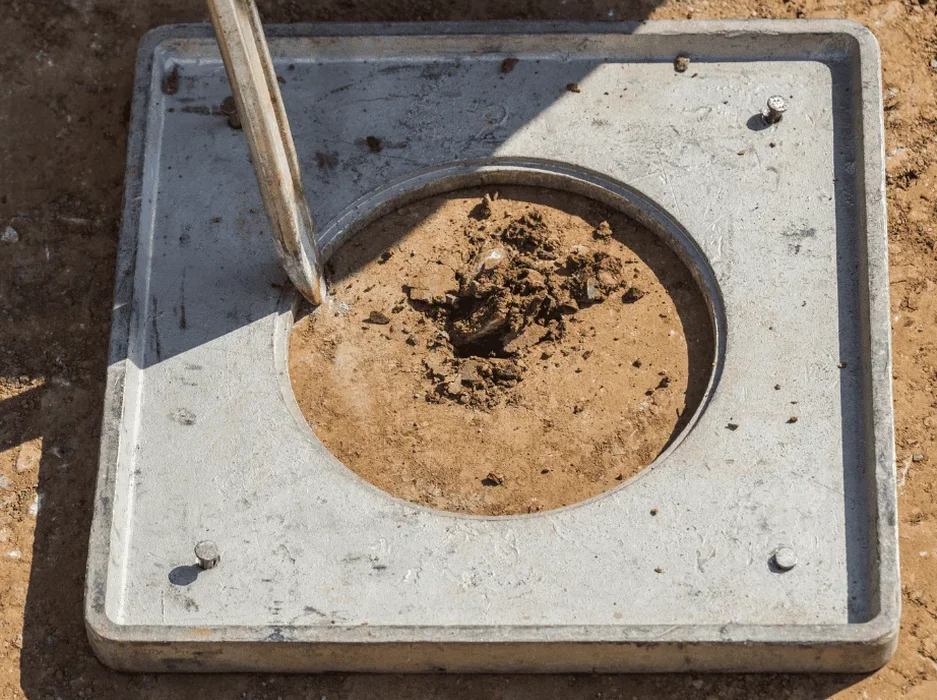
Typical technical challenges in Cape Coral
Cape Coral's entire footprint is a human- engineered landscape. Between 1957 and the mid-1970s, developers dredged over 400 miles of canals through coastal marsh, pumping the spoil onto adjacent lots to create buildable elevation. That fill is typically clean fine sand, hydraulically placed without compaction, and it sits directly above the original organic muck layer in many parcels. The geotechnical consequence is a two-tier risk profile: the fill itself is loose and saturated, Class F material for liquefaction susceptibility, while the underlying natural sand, if present below the muck, may also be contractive. A soil liquefaction analysis here must treat the fill and the native stratum as separate layers because their aging and overconsolidation histories differ radically. The fill has only 50 to 60 years of self-weight consolidation; the deeper Pleistocene sand has been through multiple sea-level cycles and may exhibit a cemented crust that masks loose material below. Ignoring that stratigraphic nuance leads to false-negative results where the SPT reports refusal on shell hash and the engineer assumes the entire column is competent.
Our services
Our Cape Coral soil liquefaction analysis program integrates field investigation, laboratory testing, and predictive modeling to deliver a factor of safety against triggering and a settlement estimate you can hand directly to your structural engineer. Every project includes a canal proximity assessment because scour and rapid drawdown from storm events can alter the groundwater regime during the design life of the structure.
SPT-Based Liquefaction Screening
Drilling to 35 feet with automatic hammer SPT, thin-walled tube sampling in the critical zone, and laboratory determination of fines content and Atterberg limits per ASTM D4318. Each blow count is corrected for overburden, hammer energy ratio, and borehole diameter before computing the cyclic resistance ratio.
CPT with Pore Pressure Dissipation
Seismic cone penetration testing with u2 piezocone to measure tip resistance, sleeve friction, and equilibrium pore pressure. The continuous profile identifies thin liquefiable seams under three inches thickness that the SPT misses, and the dissipation tests confirm the drainage condition of each sand unit.
Post-Liquefaction Settlement & Lateral Spread Analysis
Using the Ishihara-Yoshimine volumetric strain correlation and the Bartlett-Youd empirical model for lateral displacement, we provide grade-level settlement contours and horizontal spread estimates for canal-front lots where a free face condition exists toward the water.
Quick answers
How much does a soil liquefaction analysis cost for a single-family home lot in Cape Coral?
For a standard residential lot with one SPT boring to 35 feet, laboratory testing, and the liquefaction report, the investment ranges from US$2,670 to US$3,860 depending on access conditions and whether CPT verification is needed. Canal-front parcels with free-face lateral spread analysis fall toward the upper end.
Is liquefaction analysis required by the Cape Coral building code?
The Florida Building Code adopts ASCE 7-22 by reference, which mandates liquefaction evaluation for Site Classes D, E, and F when the design earthquake magnitude exceeds 5.5 and the groundwater table is within 50 feet of grade. Cape Coral's Site Class D soils and water table at two to five feet trigger the requirement for most commercial and essential facility projects; residential slabs on grade are not always flagged at plan review but the risk remains real.
What happens if my site shows liquefaction potential?
The report quantifies the depth and thickness of liquefiable layers and provides settlement estimates. Your structural engineer can then choose a mitigation strategy: vibrocompaction or stone columns to densify the sand, helical piles bearing below the liquefiable zone, or a rigid mat foundation designed to tolerate differential settlement. The goal is to present actionable numbers, not just a pass/fail flag.
How long does the field work and analysis take?
Drilling and sampling typically completes in one day. Laboratory testing for fines content and Atterberg limits requires three to five business days. The cyclic resistance ratio calculations, settlement modeling, and report preparation are delivered within ten business days from the drilling date, assuming no delays from weather or utility locating.