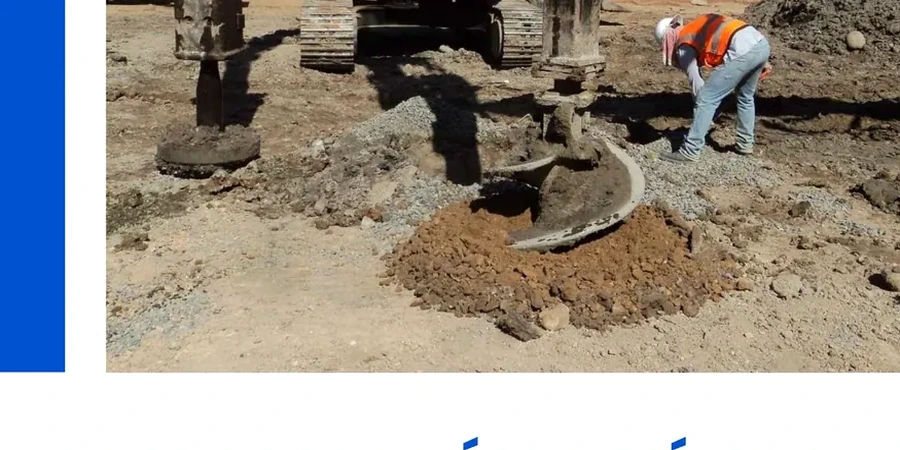
The vibroflot rig is the workhorse on most of our Cape Coral projects. A tall mast with a powerful electric or hydraulic vibrator at the bottom, it sinks into the ground under its own weight, assisted by water or air jets. As the probe reaches the design depth, we feed clean crushed stone down the annular space while the vibrator compacts it in lifts. The result is a dense column of aggregate interlocked with the surrounding soil. In Cape Coral, where the subsurface often alternates between loose quartz sands and pockets of fibrous peat, this equipment must be precisely controlled to avoid over-flushing the fines. The city's extensive canal network also means groundwater is never far below the surface, typically within three to five feet, which affects the vibro-replacement process and requires a carefully staged grain-size analysis of the backfill material before any work begins.
In Cape Coral's interbedded sands and peats, a stone column is only as reliable as the CPT profile that mapped the soft seams.
Scope of work in Cape Coral
Working video
Typical technical challenges in Cape Coral
Cape Coral's build-out since the late 1950s transformed hundreds of miles of mangrove swamp and pine flatwoods into a waterfront city with over 400 miles of navigable canals. That dredge-and-fill history left behind a chaotic subsurface: hydraulic fill sands placed over buried organic mats, old tidal channel deposits, and scattered construction debris. We've pulled core samples where a five-foot layer of black, spongy peat sits just eight feet below a proposed building pad. If stone columns are not extended through these organic zones, differential settlement can exceed three inches within the first five years, cracking slabs-on-grade and pulling apart underground utilities. Proper design requires a penetration well into the underlying competent sand or limestone, with a minimum toe embedment of two column diameters. In areas near the Caloosahatchee River, we also evaluate the potential for lateral spreading under seismic loads, per ASCE 7-22 Chapter 11, even though Florida's seismicity is low.
Our services
Every Cape Coral site brings its own set of challenges, but the sequence of work we follow remains rigorous. Our design package includes the full geotechnical investigation, laboratory testing, and the construction specification sheet. Here are the core service components we provide:
Feasibility Assessment and In-Situ Testing
We drill SPT borings and push seismic CPTu cones to map the extent of soft soils across your Cape Coral parcel. Lab testing for organic content, grain size distribution, and consolidation parameters feeds directly into the column design model.
Detailed Design and Construction Oversight
We prepare the stone column layout, specifying the grid spacing, stone gradation per ASTM D448, and lift thickness. During installation, our engineers monitor the ammeter records and backfill consumption rates to verify column continuity and diameter, adjusting the method statement for any unexpected ground variations.
Quick answers
What is the typical cost range for stone column design in Cape Coral?
For a standard residential or light commercial site in Cape Coral, the complete geotechnical investigation and stone column design package generally falls between US$1,560 and US$5,380. The final figure depends on the number of borings required, the depth of the soft soil zone, and whether CPTu testing is included to refine the settlement analysis.
How deep do stone columns typically need to go in Cape Coral?
In our experience across Cape Coral, columns typically extend from 15 to 45 feet deep. The exact depth depends on where we encounter competent bearing material, usually a dense sand layer or the underlying Tamiami Formation limestone. We always require at least two column diameters of embedment into this firm stratum.
Can stone columns be installed if the water table is very high?
Yes, the vibro-replacement method actually works well under a high water table, which is common in Cape Coral. The water jetting assists penetration, but we must carefully control the flow to prevent washing out the surrounding soil. Our designs account for the reduced effective stress and include a slightly higher area replacement ratio when the groundwater is within three feet of the surface.
How do you verify the stone columns are built correctly?
We specify a quality control program that includes monitoring the vibrator's depth, amperage draw, and backfill volume during installation of every column. Post-installation, we often run one or two modulus load tests or a limited CPTu program between columns to confirm the soil-column composite has reached the design stiffness and that settlement will remain within the specified tolerance.