Cape Coral sits barely five feet above sea level, with over 400 miles of canals woven through its neighborhoods. That water table sits high, sometimes within two feet of the surface during the wet season. Flexible pavement design here isn't a copy-paste job from inland Florida. The asphalt layers, base course, and subgrade all have to handle saturated sandy soils, frequent stormwater loading, and a flat terrain that fights natural drainage. We approach each project by calibrating the structural number against local subgrade CBR values, then adjusting the layer coefficients so the pavement withstands both traffic and the relentless moisture cycling that comes with the Gulf Coast climate. Before finalizing the cross-section, we often run a CBR road test on the prepared subgrade to confirm strength assumptions, and pair it with a Proctor test to lock in the compaction target for the base and subbase lifts.
In Cape Coral, the pavement fails from the bottom up – control the subgrade moisture, and you control the pavement life.
Scope of work in Cape Coral
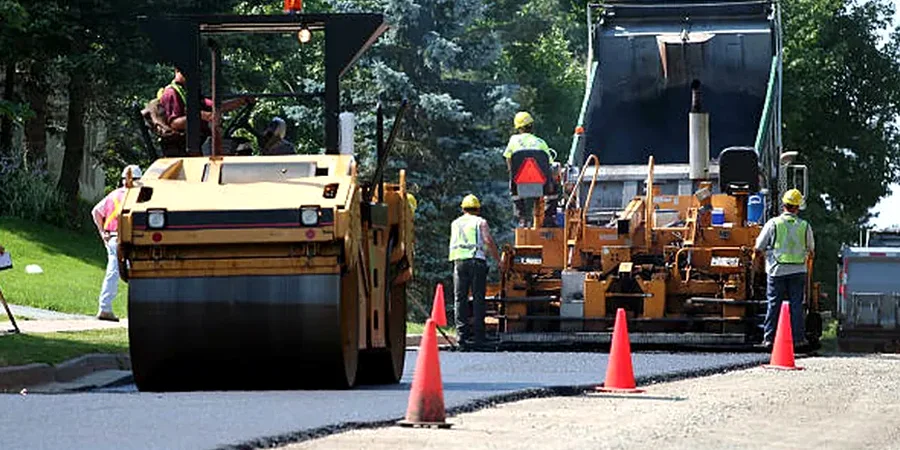
Typical technical challenges in Cape Coral
We use a nuclear density gauge and a lightweight deflectometer right on the Cape Coral subgrade before the first truck of base rock ever arrives. The risk is hidden: a soft lens of organic silt left from an old mangrove pocket, or a poorly compacted utility trench that will reflect-crack through the new asphalt within 18 months. Our field crew proof-rolls every square foot and marks suspect zones for undercut and replacement. We also test the in-situ permeability of the subgrade because standing water on the formation is a non-negotiable stop-work condition. A pavement section that looks perfect on a spreadsheet will fail early if the drainage layer saturates, so we enforce a minimum 2% cross-slope on the subgrade surface and tie the base course into positive outfall toward the storm sewer or canal.
Our services
Our Cape Coral flexible pavement design work covers the full chain from subgrade evaluation to construction oversight. These are the core services we deliver on every local project.
Subgrade CBR and Proctor Testing
We extract undisturbed samples from the formation depth and run soaked CBR tests that simulate the worst-case moisture conditions Cape Coral subgrades will see during the rainy season.
Pavement Structural Design
Using AASHTO 1993 procedures and local traffic counts, we calculate the required structural number and build the layer configuration – asphalt, base, optional subbase – matched to the site subgrade modulus.
Drainage Analysis and Edge Drain Design
We model the groundwater table and design french drains or edge drains that keep the pavement section unsaturated, critical for streets adjacent to Cape Coral's canal network.
Construction QA/QC
Nuclear density testing, LWD deflection readings, and asphalt core extraction during placement to verify compaction and layer thickness against the approved design.
Quick answers
How much does a flexible pavement design for a Cape Coral project cost?
What asphalt thickness does Cape Coral require for residential streets?
Most Cape Coral residential streets are designed with 1.5 to 2 inches of asphalt surface course over 6 to 8 inches of crushed limestone base. The exact thickness comes out of the AASHTO structural number calculation, not a rule of thumb, because the native sand subgrade varies block by block.
How do you handle pavement design near the canals?
Roadways within 50 feet of a canal bank get an edge drain on the canal side, and we raise the design groundwater elevation by 12 inches in the drainage analysis. The base course thickness often increases by 2 inches in these zones to compensate for the higher moisture content and reduced subgrade strength.