Cape Coral's 400 miles of canals create a unique challenge for pavement engineers. The city sits on a shallow freshwater lens over limestone, where groundwater fluctuates with the tides and summer rains. Standard pavement designs fail here because the subgrade conditions change dramatically between the wet and dry seasons. We see sulfate concentrations in the soil that attack concrete, and organic layers from the original mangrove terrain that compress under load. A rigid pavement design in Cape Coral must account for these factors from the first soil boring. Our approach integrates geotechnical data from test pits with concrete mix specifications that resist chemical degradation, producing pavements that hold their geometry through hurricane seasons and daily thermal cycles on the Gulf Coast.
In Cape Coral, the difference between a 20-year pavement and a 5-year pavement is often the subgrade treatment that nobody sees after the concrete is poured.
Scope of work in Cape Coral
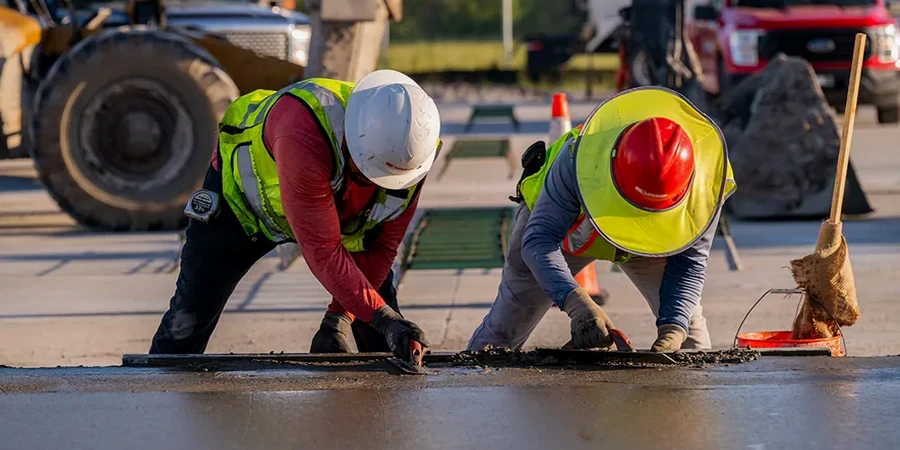
Typical technical challenges in Cape Coral
A warehouse project off Pine Island Road taught us what happens when rigid pavement design ignores Cape Coral's settlement patterns. The original engineer specified an 8-inch slab on untreated fill. Within 18 months, differential settlement at the organic soil interface opened transverse cracks wide enough to damage forklift axles. The repair required full-depth patching across 40% of the slab area and a cement grouting program under the settled sections. In Cape Coral's canal-front environment, even minor subgrade variability creates stress concentrations that rigid pavements cannot redistribute the way flexible pavements might. The stiffness that makes concrete attractive for heavy loads also makes it unforgiving of geotechnical oversights. We now mandate a minimum of one boring per 2,500 square feet in Cape Coral, with additional soundings at any transition between natural soil and fill. The cost of this investigation is trivial compared to the downtime and reconstruction expense of a failed industrial pavement.
Our services
We provide rigid pavement engineering services across Cape Coral, from residential driveway specifications to arterial roadway design for Lee County commercial developments. Each project starts with site-specific geotechnical investigation and ends with construction-phase support.
Concrete Pavement Design & Thickness Optimization
Full AASHTO 93 rigid pavement design including slab thickness analysis, joint layout and detailing, load transfer design, and subbase specification. We produce construction-ready plan sheets with dowel schedules and tie bar patterns matched to Cape Coral's soil conditions.
Subgrade Evaluation & Stabilization Plans
Site investigation including soil borings, laboratory classification, and k-value determination. We design chemical stabilization programs for organic silts, cement-treated subbase for high groundwater zones, and drainage provisions that prevent pumping at slab edges.
Quick answers
What does rigid pavement design cost in Cape Coral?
The engineering design fee for a rigid pavement project in Cape Coral typically ranges from US$1,780 to US$5,990, depending on the project area, number of soil borings required, and complexity of the joint layout. This covers subgrade investigation, thickness design per AASHTO 93, joint detailing, and specification writing. The construction cost of the pavement itself is separate and varies with concrete quantity and subgrade treatment needs.
How does Cape Coral's high water table affect concrete pavement performance?
A high water table creates two problems for rigid pavements. First, saturated fine-grained subgrades lose bearing capacity, reducing the modulus of subgrade reaction and requiring thicker slabs or stabilized bases. Second, water moving through joints can erode subgrade material from under slab edges, creating voids that lead to corner breaks. We address this with cement-treated base layers and properly sealed joints with drainage provisions.
What concrete mix specifications do you recommend for Cape Coral's sulfate soils?
We specify sulfate-resistant cement per ASTM C150 when soil testing confirms sulfate concentrations above 0.10%. This typically means Type II or Type V portland cement, often blended with supplementary cementitious materials like fly ash or slag at 25-35% replacement. We also limit water-cement ratio to 0.45 maximum and specify a minimum 28-day compressive strength of 4,000 psi for exterior flatwork in sulfate exposure conditions.
How long does rigid pavement design take from investigation to final plans?
A typical Cape Coral project moves from field investigation to final stamped design in 3 to 4 weeks. This includes soil boring and sampling, laboratory testing for classification and sulfate content, k-value determination, pavement thickness analysis, joint design, and preparation of construction documents. Larger projects with multiple pavement sections or phased construction may require additional time.