A contractor we worked with on a canal-front project off Surfside Boulevard was puzzled by the erratic refusal depths from standard penetration tests: one boring hit dense sand at 18 feet, the next refused on limestone at 11. That kind of scatter in Cape Coral is not unusual, given the mix of Pleistocene quartz sands, shell hash, and intermittent Tamiami Formation limestone that underlies much of the city. CPT cone penetration testing cuts through that ambiguity. The cone provides a continuous resistance profile every two centimeters, so instead of guessing what sits between split-spoon intervals, you see the full stratigraphic column. For Cape Coral’s 200,000 residents and the engineers designing everything from single-family homes to mid-rise condominiums, CPT offers a faster, cleaner alternative to traditional drilling, with the added benefit of pore pressure measurement that flags loose, liquefiable layers before they become a liability. When the stratigraphy is this variable, relying on discrete SPT blows alone leaves too much to chance; we often combine SPT drilling with CPT soundings on the same site to calibrate correlations against local geology.
The cone does not just tell you how strong the soil is; it tells you what the soil is, layer by layer, in a single continuous log that no rotary rig can match.
Scope of work in Cape Coral
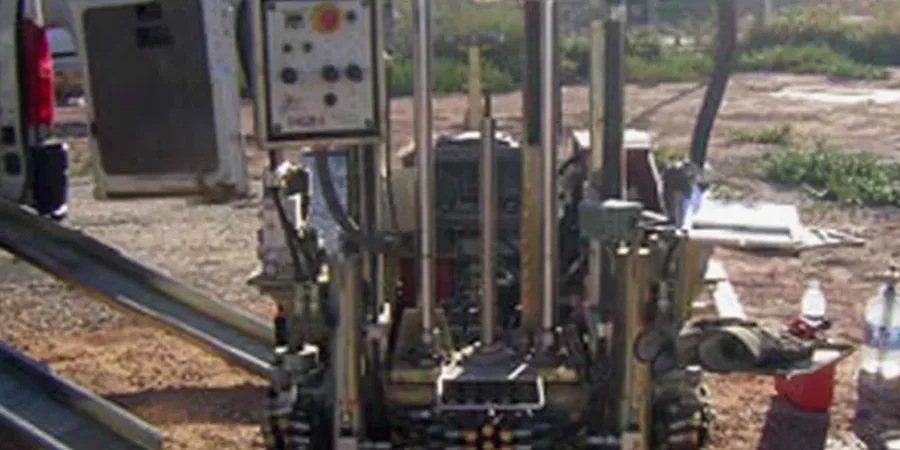
Working video
Typical technical challenges in Cape Coral
The mistake we see repeatedly in Cape Coral is designing shallow foundations using SPT N-values from a single boring without recognizing that an isolated refusal on a thin limestone lens tells you nothing about the soil below or beside it. CPT exposes that lens for what it is: a discontinuous caprock that may be three feet thick in one location and completely absent twenty feet away. Ignoring the continuous profile invites differential settlement, particularly where loose, saturated sand underlies the limestone and densifies under load. In the worst cases, we have been called in after a slab-on-grade on fill over organic silt began to crack within the first year. The CPT’s friction ratio and pore pressure response identify organic and highly compressible layers that visual classification misses. On waterfront properties—and Cape Coral has over 400 miles of canals—liquefaction assessment becomes non-negotiable; the cone’s pore pressure data feeds directly into cyclic resistance ratio calculations, and our team routinely runs liquefaction analysis from CPT data using the NCEER methodology refined by Youd and Idriss.
Our services
Our CPT services in Cape Coral are structured to support the full project timeline, from preliminary site screening through final foundation design. Every sounding is supervised by a field engineer who knows the local geology and can adjust the test plan based on real-time data.
Standard CPT Soundings (Single-Channel)
Tip resistance and sleeve friction profiling for soil behavior type classification, relative density, and preliminary bearing estimates in sandy Cape Coral soils.
Piezocone (CPTu) with Pore Pressure Dissipation
Dynamic pore pressure measurement during penetration plus dissipation tests at target depths to estimate hydraulic conductivity and identify drainage characteristics of the shallow aquifer.
Seismic CPT (SCPTu)
Downhole shear wave velocity measurement at every meter using a seismic cone, providing Vs profiles for site class determination per ASCE 7 and IBC requirements.
CPT-Based Foundation Parameter Report
Processed data delivered with interpreted bearing capacity, settlement curves, liquefaction screening, and pile axial capacity estimates using LCPC and Fugro methods.
Quick answers
How much does a CPT sounding cost in Cape Coral?
How deep can CPT go before refusing on Cape Coral limestone?
In our experience across Cape Coral, refusal on the Tamiami Formation limestone commonly occurs between 40 and 80 feet below grade, though depth varies considerably by location. We use a 20-ton thrust rig and can pre-drill through thin hard layers to continue sounding where the underlying material is of interest.
Can CPT replace SPT borings for foundation design in Florida?
For many Cape Coral sites, CPT provides superior continuous data and is accepted by Florida Building Code when correlated to standard penetration resistance. However, we often recommend one or two SPT borings alongside CPT soundings to recover samples for laboratory testing and to calibrate site-specific correlations, particularly where the limestone content is high.
How do you handle CPT data interpretation for Cape Coral’s mixed soils?
We apply Robertson’s normalized soil behavior type charts with corrections for overburden stress and pore pressure, then validate the classification against available boring logs and local geological knowledge of the Tamiami Formation and overlying Quaternary sands. For shell-rich layers common near the coast, we adjust the friction ratio interpretation based on regional experience.