Contractors in Cape Coral skip the Atterberg limits test more often than you'd think. They see sandy fill and assume it's stable. Big mistake. Our lab gets samples from job sites near the Caloosahatchee every week where a thin clay seam turned a simple footing into a change order. Cape Coral sits on a mix of dredged sand, shell fragments, and pockets of organic silt that shift classification dramatically with just a few percentage points of fines. The liquid limit and plastic limit pin down exactly how that soil will behave when the summer rains hit and the water table rises. We run ASTM D4318 on every fine-grained sample that comes through the door, no exceptions. For sites near the canals where the soil profile changes every 50 feet, pairing Atterberg data with grain size analysis gives you the full picture before the backhoe ever shows up.
A plasticity index above 20 in Cape Coral's canal-adjacent soils means you're dealing with expansive potential. Don't guess on that number.
Scope of work in Cape Coral
Typical technical challenges in Cape Coral
Cape Coral grew fast. Before 1957, most of this was mangrove swamp and pine flatwoods. The developers dredged canals, piled the spoil to create building lots, and sold the dream. That history left a subsurface legacy: the fill varies from clean sand to silty clay depending on which canal the material came from. A building pad near Cape Coral Parkway might test non-plastic on one side and hit a PI of 25 ten feet away. The Atterberg limits catch that variability. Without them, you're flying blind on expansion potential, settlement behavior, and shear strength. We've seen slabs crack within two years because the soil beneath had a high liquid limit and nobody tested for it. When the rainy season saturates those fine-grained layers, the soil loses strength fast. The test is simple, the cost is minimal, and the data it provides for foundation design is irreplaceable.
Our services
Our Cape Coral laboratory conducts a comprehensive suite of plasticity tests. Same-day sample submission is offered for local projects. The following deliverables are provided:
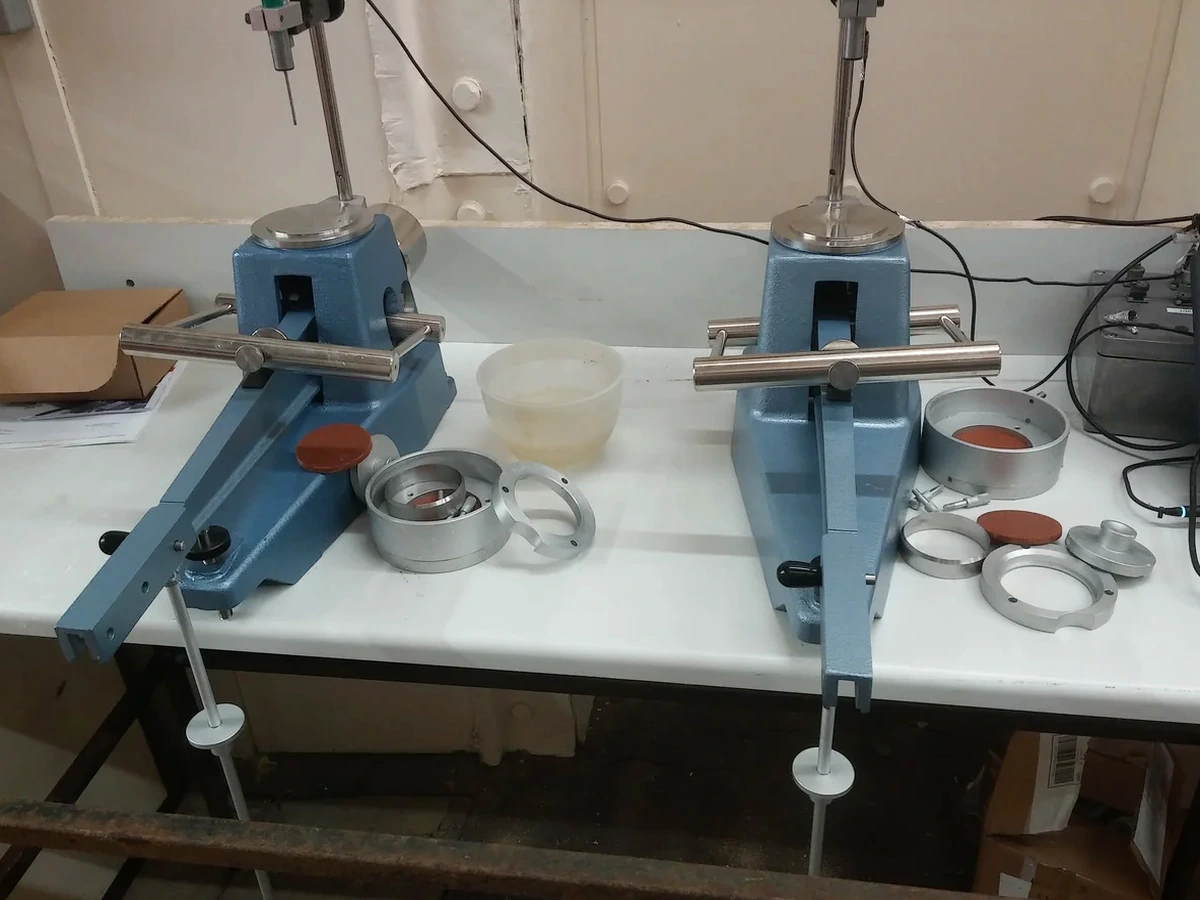
Liquid Limit Testing (Casagrande)
Multipoint method per ASTM D4318. We run three to four blow counts per sample and plot the flow curve. LL reported to the nearest whole number.
Plastic Limit & Plasticity Index
Thread-rolling method to determine the moisture content at the boundary between plastic and semisolid states. PI calculated as LL minus PL.
USCS Classification Package
Combined Atterberg limits and grain size analysis to assign the full Unified Soil Classification System group symbol and group name per ASTM D2487.
Quick answers
How much does Atterberg limits testing cost in Cape Coral?
Which Cape Coral soils need Atterberg limits testing?
Any soil with visible fines. If you can see silt or clay in the sample, or if the material feels smooth when wet, it needs the test. The Tamiami Formation deposits and canal dredge fill across Cape Coral frequently contain silty clay lenses that require classification before you can design footings or pavement sections.
What sample size do you need for the test?
We need about 300 grams of material passing the No. 40 sieve, from a representative bag sample. For Cape Coral sites, we recommend taking samples at depth intervals, not just from the surface, because the fill stratigraphy changes quickly with depth.
How fast can I get results?
Standard turnaround is 24 to 48 hours. If you're on a tight deadline, call us before noon and we can often push same-day results for the liquid limit and plastic limit on a single sample. We email the report as a PDF with the flow curve and all calculated values.