Cape Coral didn’t grow organically over centuries. It was master-planned in 1957, carved out of pine flatwoods and mangrove swamps with over 400 miles of canals—more than any other city on Earth. That aggressive dredging created the waterfront lots people love, but it also manufactured a complex subsurface. Fill material, dredged spoil, and natural loose sands are layered in ways that no two lots share. A standard soil mechanics study here is not a generic report; it is the only way to verify whether the ground beneath a future slab can handle the structural loads without differential settlement. We combine ASTM D1586 standard penetration tests with laboratory classification under ASTM D2487 to map the real stratigraphy. For deeper profiles where canal proximity raises questions about bearing capacity, we often pair the SPT with a CPT test to get a continuous resistance trace, especially when shell fragments or loose sand seams require precise tip resistance data.
In Cape Coral, the water table is the architect of your foundation—ignore its seasonal fluctuations and you design by luck, not by code.
Scope of work in Cape Coral
Typical technical challenges in Cape Coral
We reviewed a three-story condo project off Veterans Parkway where the initial geotechnical report—a low-cost desktop study—assumed a homogeneous sand layer to 30 feet. When we mobilized our drill rig, we found a buried organic peat lens at 11 feet, roughly nine feet thick, directly under the planned elevator shaft. The original design called for a shallow spread footing with an allowable bearing pressure of 2,500 psf. That peat layer would have compressed unevenly under load, tilting the shaft and cracking the surrounding shear walls within the first two rainy seasons. Our soil mechanics study caught it early. The structural team redesigned the shaft support with deep-driven piles socketed into the underlying limestone, bypassing the compressible material entirely. The delay was two weeks. The alternative was a structural failure that would have cost eight figures to remediate. In Cape Coral, where fill deposits and natural organics coexist unpredictably, skipping a rigorous sampling program is not a savings strategy—it is a speculative bet against the local geology.
Our services
A complete soil mechanics study in Cape Coral goes beyond just drilling a hole and counting blows. It integrates field exploration, laboratory testing, and engineering analysis to produce a single, coherent foundation recommendation.
Subsurface Exploration
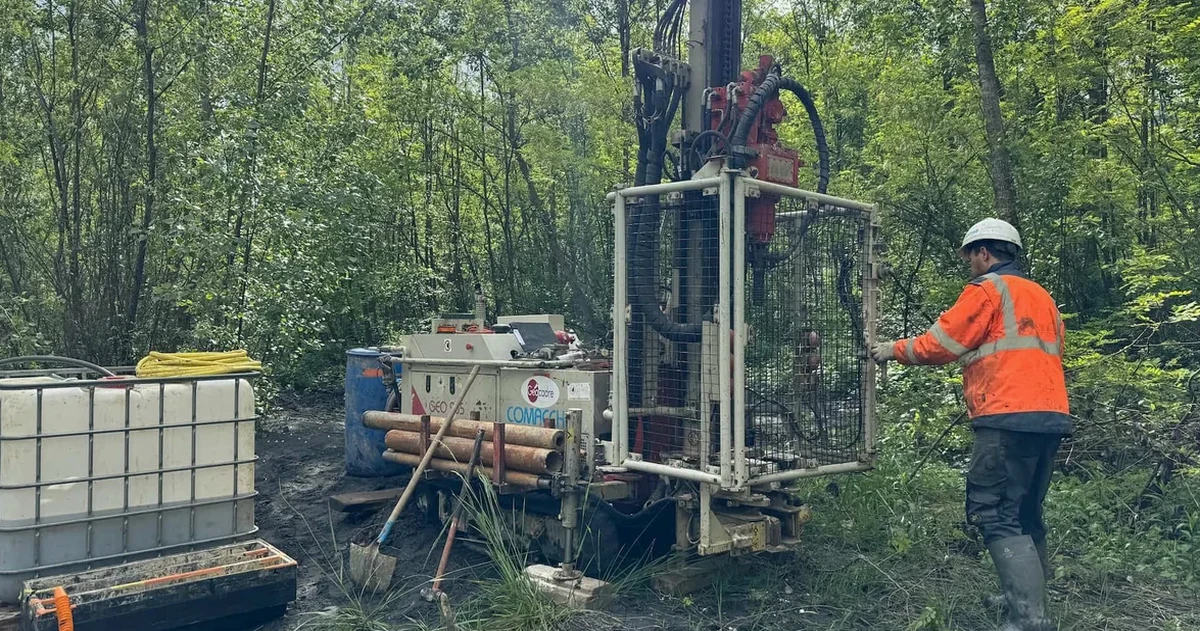
SPT borings with continuous split-spoon sampling, logged by a field engineer. We map each stratum, note groundwater depth, and identify potential obstructions like caprock or buried debris from canal construction.
Laboratory Testing Suite
Moisture content, Atterberg limits, sieve analysis with hydrometer, direct shear, and consolidation tests. Every sample is processed in our ISO 17025-accredited lab, not a third-party subcontractor.
Foundation Engineering Report
We deliver bearing capacity values, anticipated total and differential settlement, lateral earth pressure coefficients, and specific recommendations for footing type and depth—signed and sealed by a Florida-registered engineer.
Quick answers
How much does a soil mechanics study in Cape Coral typically cost?
Why can't I just use the county soil survey map for my permit?
County soil surveys provide broad, generalized data at a scale of 1:24,000—useful for planning, not for design. Cape Coral's artificial fill and dredged canal material create micro-scale variations that a map cannot capture. A site-specific soil mechanics study measures the actual bearing capacity at your foundation depth and satisfies the structural engineer's duty of care under the Florida Building Code.
How deep do you typically drill for this study?
In Cape Coral, we usually extend borings to a minimum of 20 feet below existing grade, or until we penetrate at least 10 feet into a competent bearing stratum like dense sand or limestone caprock. If deep fills are present—common in canal-front lots—we may go deeper. The rule of thumb is that the boring depth must be at least twice the width of the largest continuous footing, plus any depth influenced by stress bulb overlap.
What happens if you find organic material or peat under my lot?
We quantify its thickness, lateral extent, and compressibility through consolidation testing. Then we present the structural engineer with options: excavate and replace it with engineered fill, preload the site to accelerate settlement, or bypass it with deep foundations like driven piles. The soil mechanics study gives you the data to make that decision before construction, not during a costly foundation repair.