A recent residential development off Burnt Store Road encountered fill that would not reach 95% compaction despite multiple passes with a heavy roller. The contractor had moisture content in the wrong range. That is a common issue in Cape Coral, where the near-surface sands transition quickly from too dry to saturated depending on recent rainfall and canal proximity. When the water table sits only a few feet down, controlling moisture during compaction becomes the defining challenge. Our lab runs the Proctor test, both standard and modified, to establish the target density and optimum moisture content before earthwork begins. We correlate the lab curve with field sand cone density checks so the compaction spec is achievable, not theoretical, and we tie results to ASTM D698 or D1557 depending on the structural loading from the foundation design.
A lab Proctor curve is only as useful as the field moisture control that follows it—flat curves on Cape Coral sands demand tighter moisture specs.
Scope of work in Cape Coral
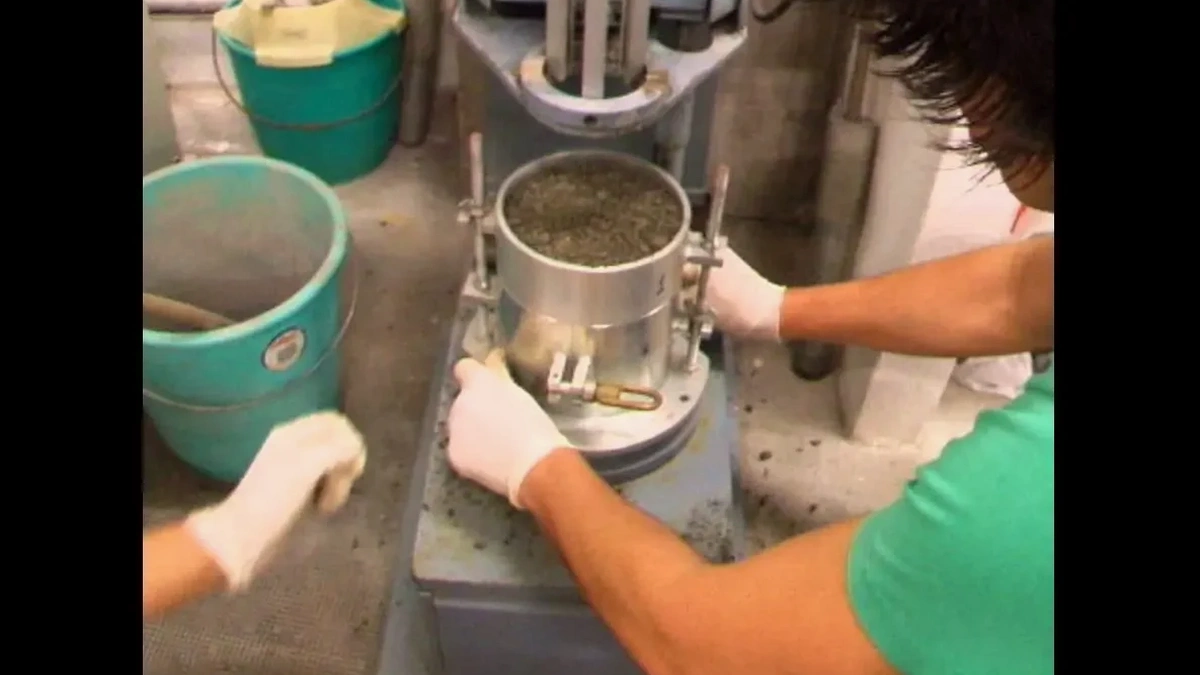
Typical technical challenges in Cape Coral
The dry-winter to wet-summer swing in southwest Florida creates a compaction window that closes fast. Fill placed during the June-to-October wet season often arrives above optimum moisture, and working it simply pumps the subgrade without increasing density. Over-compaction on the dry side of the curve, common in March and April, leaves a collapsible structure that settles when the rainy season saturates the profile. We have seen subdivision roads in Cape Coral develop 2-inch depressions within a year because the fill was compacted 4 percent below optimum moisture and never tested against the Proctor target. Another local risk is shell-rich fill: the plate-shaped particles crush under the modified effort, shifting the curve and invalidating the standard Proctor reference. We address this by running both standard and modified curves on the same material whenever crushed shell content exceeds 15 percent, giving the geotechnical engineer a range of density values to specify based on the actual confining stress in the fill lift.
Our services
Compaction control in Cape Coral begins with a dependable Proctor reference and proceeds with field verification. The full sequence is provided.
Standard Proctor (ASTM D698)
Four-point moisture-density curve using the 5.5-lb hammer and 12-inch drop. Specified for residential slabs-on-grade, landscape berms, and low-rise commercial pads where modified effort is not required by the structural engineer.
Modified Proctor (ASTM D1557)
Four-point curve using the 10-lb hammer and 18-inch drop. Required for arterial road subgrade, heavy-duty pavement sections, and engineered fill beneath mat foundations where higher bearing capacity demands a denser soil skeleton.
One-Point Proctor (Field Quick Check)
A single-point verification using the family-of-curves method when the borrow source has been previously characterized. Useful for daily compaction control when fill material remains consistent, reducing lab turnaround from 48 hours to same-day confirmation.
Quick answers
Which Proctor method applies to my Cape Coral project?
It depends on the structural loading. Most single-family residential pads in Cape Coral use the standard Proctor (ASTM D698). Commercial buildings, roads, and any fill supporting heavy wheel loads typically require the modified Proctor (ASTM D1557). The geotechnical report should specify the method and the minimum compaction percentage, usually 95% or 98% of the maximum dry density from the lab curve.
How much does a Proctor test cost in Cape Coral?
How long does it take to get results?
Standard turnaround is 48 hours for a full four-point Proctor curve. We can expedite to 24 hours when earthwork is on hold. The one-point quick check, when the family of curves already exists, can be reported same-day if the sample arrives before noon.