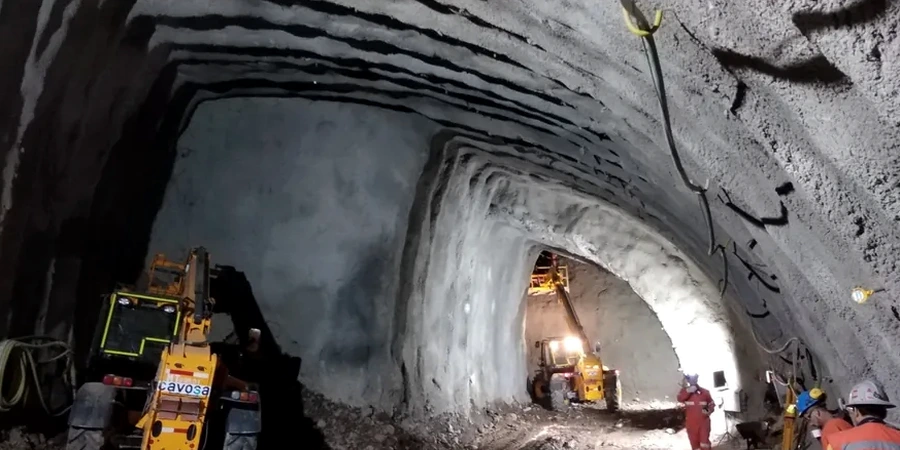
Underground excavations in Cape Coral represent a specialized branch of geotechnical engineering that deals with the design, construction, and monitoring of subterranean openings in one of Florida's most challenging geological settings. This category encompasses everything from shallow utility trenches to complex deep foundations and tunneling projects, all of which must contend with the region's unique subsurface conditions. Given Cape Coral's extensive network of canals, high water table, and rapid urban development, proper underground excavation practices are not merely a technical requirement but a fundamental necessity for public safety and infrastructure longevity. Professionals in this field must integrate advanced geotechnical analysis for soft soil tunnels with practical construction methodologies to mitigate risks such as ground collapse, water inflow, and settlement.
The local geology of Cape Coral is dominated by a near-surface limestone caprock underlain by loose sands, silts, and clay layers, with the surficial aquifer sitting barely a few feet below ground level. This stratigraphy creates a dual challenge: the limestone can be riddled with dissolution cavities and fractures that compromise stability, while the saturated granular soils below are highly susceptible to piping and heave during excavation. The city's flat topography and proximity to the Gulf of Mexico further complicate dewatering efforts, as any underground work must account for tidal fluctuations and potential saltwater intrusion. These conditions demand a robust geotechnical design of deep excavations that includes thorough site characterization, soil improvement techniques, and real-time groundwater control measures.
Regulatory oversight for underground excavations in Cape Coral falls under the Florida Building Code, specifically Chapter 18 on Soils and Foundations, which adopts and modifies provisions from the International Building Code (IBC). Additional requirements stem from the Florida Department of Environmental Protection (FDEP) for dewatering permits, the South Florida Water Management District for aquifer protection, and local Cape Coral ordinances governing excavation near canals and rights-of-way. OSHA's Subpart P on Excavations mandates protective systems for trenches deeper than five feet, while the Florida Administrative Code Chapter 62-520 addresses groundwater quality during construction dewatering. Compliance with these codes is non-negotiable and requires continuous geotechnical excavation monitoring to verify that design assumptions hold true throughout the construction phase.
Typical projects requiring underground excavation services in Cape Coral range from residential foundation construction and swimming pool installations to large-scale municipal infrastructure such as stormwater drainage tunnels, lift stations, and utility corridors. The city's ongoing expansion of its reclaimed water network and the need to upgrade aging wastewater systems have driven demand for trenchless technologies and microtunneling, which minimize surface disruption in densely built neighborhoods. Commercial developments along the Pine Island Road corridor and waterfront properties also necessitate deep excavations for basements and parking structures, often requiring temporary shoring systems designed to withstand both soil and hydrostatic pressures. Each project type demands a tailored approach that balances cost, schedule, and risk through rigorous geotechnical planning.
Quick answers
What are the main geotechnical risks associated with underground excavations in Cape Coral?
The primary risks include groundwater inflow due to the high water table, instability in loose saturated sands, and potential collapse from dissolution cavities in the limestone caprock. Settlement of adjacent structures and canal banks is also a significant concern, requiring thorough site investigation and continuous monitoring to prevent failures.
What permits are typically required for underground excavation projects in Cape Coral?
Projects generally require a City of Cape Coral excavation permit, a dewatering permit from the Florida Department of Environmental Protection (FDEP) if groundwater is encountered, and possibly a South Florida Water Management District permit for aquifer impacts. Trench safety plans must comply with OSHA Subpart P regulations.
How does the high water table in Cape Coral affect underground excavation methods?
The shallow groundwater, often within two to four feet of the surface, necessitates continuous dewatering systems such as wellpoints or deep wells. Excavation support systems like sheet piles or secant walls must be designed to handle hydrostatic pressure, and construction sequencing must account for buoyancy and soil softening during pumping.
What are the cost factors influencing underground excavation projects in this region?
Key cost drivers include the need for extensive dewatering, soil stabilization measures such as grouting or ground freezing, specialized shoring systems for soft soils, and regulatory compliance monitoring. Unforeseen ground conditions like voids or contaminated soils can significantly escalate budgets, making pre-construction geotechnical investigation a critical investment.